Feeling mentally drained or emotionally low? Yoga can be a powerful natural way to heal from within. In this guide on the Best Yoga Asanas for Depression, we’ll explore how specific yoga poses help balance the mind, calm anxiety, and uplift your mood. Backed by both ancient wisdom and modern research, these simple yet transformative postures can help you release stress, improve focus, and reconnect with inner peace — one breath at a time.
Depression can feel like a heavy load—emotionally, physically, and mentally. Beyond medications or therapy, a complementary and powerful route is through the body-mind connection. The ancient practice of Yoga (postures + breath + mind-awareness) offers one such route. A growing body of research shows that yoga can reduce symptoms of depression, support mood regulation, improve stress resilience, and enhance well-being.
In this guide, you’ll learn why yoga helps, what the science says, which asanas work especially well for depression, how to practice them safely, and how to integrate a routine for lasting change.
Why Yoga Can Help Depression: Mind-Body Mechanisms
Understanding Depression
Depression involves more than “feeling sad.” It may include prolonged low mood, loss of interest, fatigue, disturbed sleep, impaired concentration, and physical symptoms. Traditional treatments (therapy, medication) are crucial—but many people benefit from additional strategies that target lifestyle, body-mind regulation, and self-empowerment.
How Yoga Works for Mood
Here are key mechanisms by which yoga may support alleviating depression:
- Stimulates the parasympathetic nervous system (“rest & digest”): Certain postures, combined with breath control, help shift from chronic stress mode to deeper calm.
- Improves brain‐body communication: Yoga practices have been shown to influence brain structures associated with attention, mood regulation, and memory.
- Reduces rumination and negative thinking: Through mindful movement and awareness of breath, yoga helps interrupt cycles of negative thoughts and low mood.
- Promotes neurochemical changes: Some studies suggest yoga increases levels of GABA (an inhibitory neurotransmitter) or improves regulation of stress hormones.
- Enhances physical health and self-efficacy: Being able to move the body, hold postures, feel strength and calm helps boost self-confidence and sense of agency, which often get eroded in depression.
What the Research Says
- A systematic review found that yoga interventions produced moderate improvements in depressive symptoms (e.g., Cohen’s d ≈ −0.60) in people with major depressive disorder (MDD).
- Early studies indicate that yoga may be “helpful for depression and anxiety” though methodological limitations exist.
- Some research emphasises that yoga is not a standalone cure but a valuable adjunct to standard treatments.
In short: yoga is a safe, accessible, and supportive practice for many individuals experiencing depression—especially when combined with other therapies and lifestyle habits.
Top Yoga Asanas for Depression
Below are some of the most beneficial yoga asanas (postures) for addressing the mind-body aspects of depression. Each includes how-to, benefits, and precautions.
1. Sukhasana (Easy Pose)
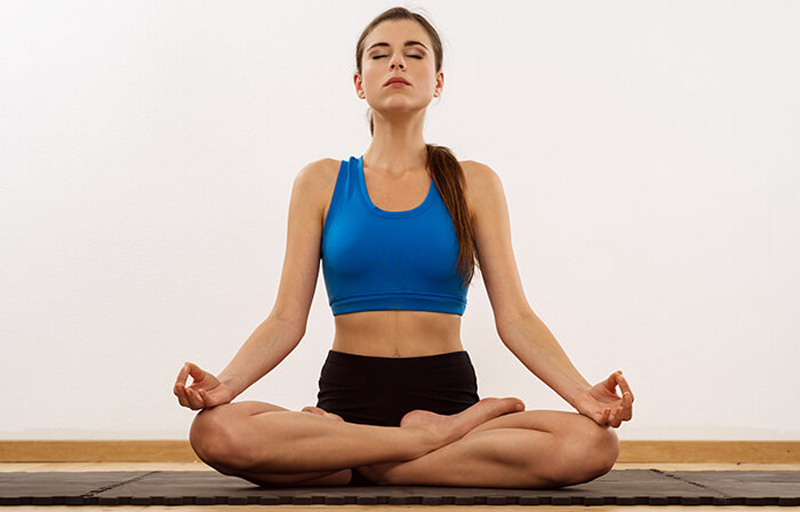
How to do it:
- Sit cross-legged on the floor or mat, with a cushion under your hips if needed.
- Keep spine straight, shoulders relaxed, chin slightly tucked.
- Rest hands on knees or thighs, palms up or down.
- Close eyes, focus on your breath, and sit for 2-5 minutes (or longer if comfortable).
Benefits: Grounding, calming, helps reduce anxiety and rumination, gently opens the chest and helps breathe deeply.
Precautions: If hips or knees are tight, use a cushion or sit on a block; modify as needed.
2. Adho Mukha Svanasana (Downward-Facing Dog)
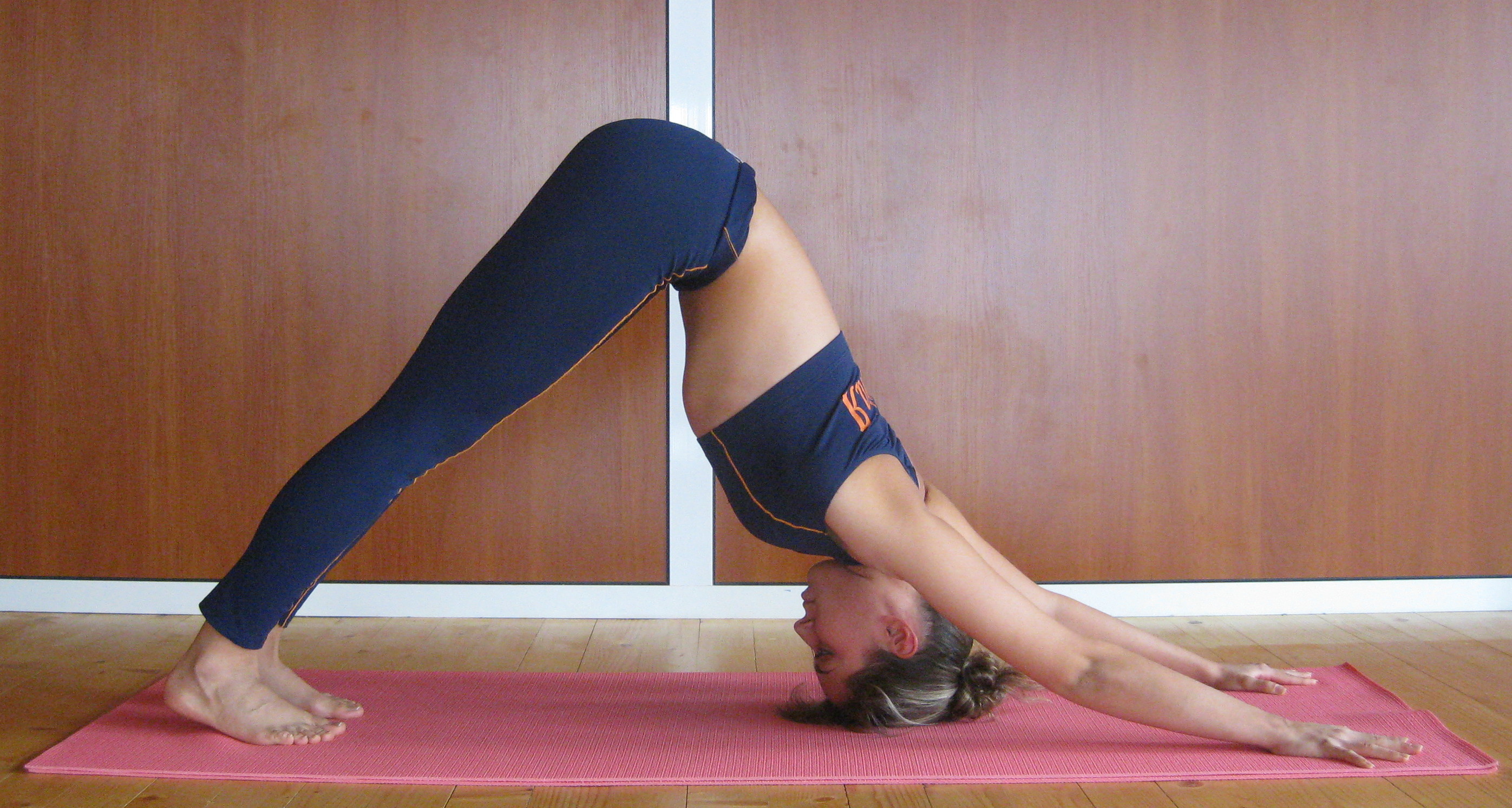
How to do it:
- Begin on hands and knees (tabletop).
- Spread fingers wide, tuck toes, lift hips up and back into an inverted “V” shape.
- Keep arms straight (or slightly bent if needed), press heels toward floor, elongate spine.
- Hold 30-60 seconds, breathe deeply.
Benefits: Increases blood flow to the brain, energises the body, lengthens the spine—helpful when depressed mood is heavy or inactive.
Precautions: Avoid if you have wrist/shoulder injuries unless modified; bend knees if hamstrings are tight.
3. Bhujangasana (Cobra Pose)
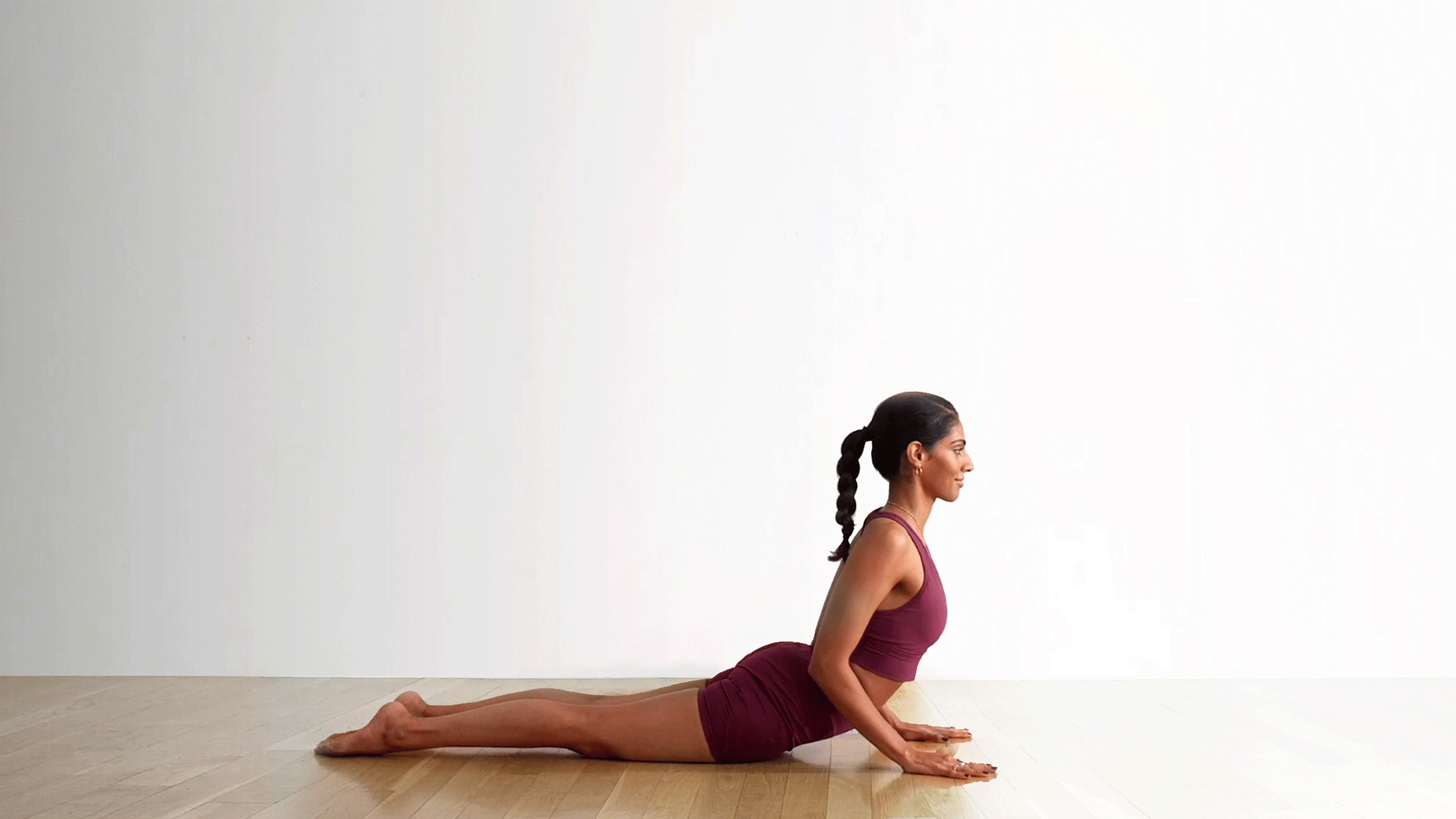
How to do it:
- Lie face-down on mat, legs extended, tops of feet resting on the floor.
- Place palms under shoulders, elbows close to sides.
- Inhale, press through palms, lift chest and upper body off the floor, keeping shoulders back and down.
- Gaze forward or slightly up. Hold for 15-30 seconds, then release.
Benefits: Opens the chest (sometimes closed in depressed posture), stimulates the spine and nervous system, encourages positive, heart-opening energy.
Precautions: Avoid if you have lower-back injuries without guidance.
4. Viparita Karani (Legs-Up-the-Wall Pose)
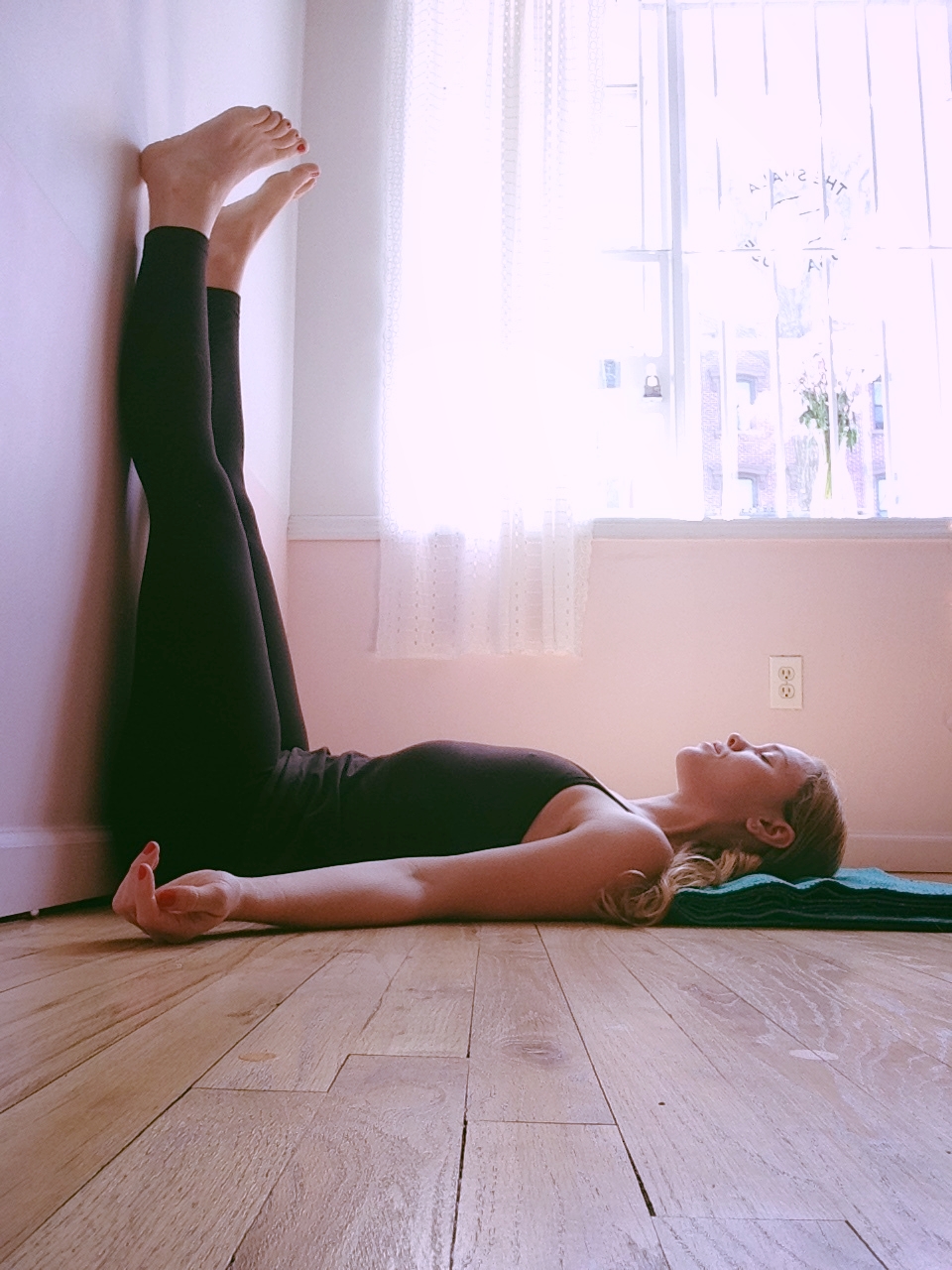
How to do it:
- Sit sideways next to a wall, then lie back and swing your legs up onto the wall so that your buttocks are close to the wall and legs fully vertical.
- Arms rest by sides, palms up. Eyes closed.
- Hold 3-10 minutes.
Benefits: A restorative inversion that calms the nervous system, reduces stress, improves circulation, supports emotional regulation.
Precautions: Avoid if you have serious eye/ear issues, high blood pressure, or neck/back worries unless modified.
5. Setu Bandhasana (Bridge Pose)
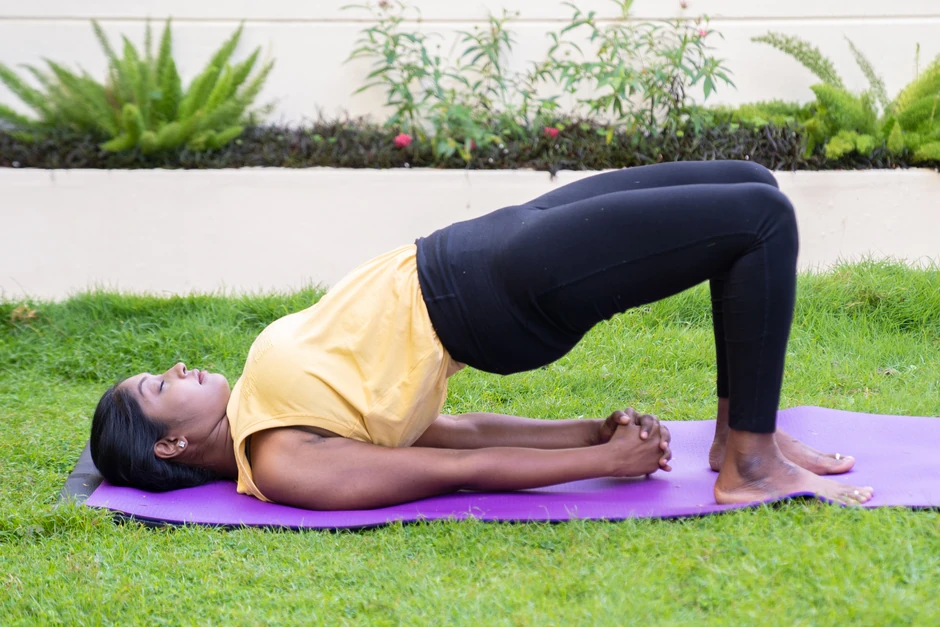
How to do it:
- Lie on back, knees bent, feet flat on floor hip-width apart, arms alongside body.
- Inhale, press feet & arms down, lift hips toward ceiling.
- Interlace fingers under back if comfortable, open chest. Hold for 30-60 seconds, then slowly lower.
Benefits: Opens the heart and chest (counteracting collapsed posture in depression), stimulates spinal and nerve-flow, uplifts mood.
Precautions: If you have neck issues, avoid interlaced arms under back; support spine with a block if needed.
6. Balasana (Child’s Pose)
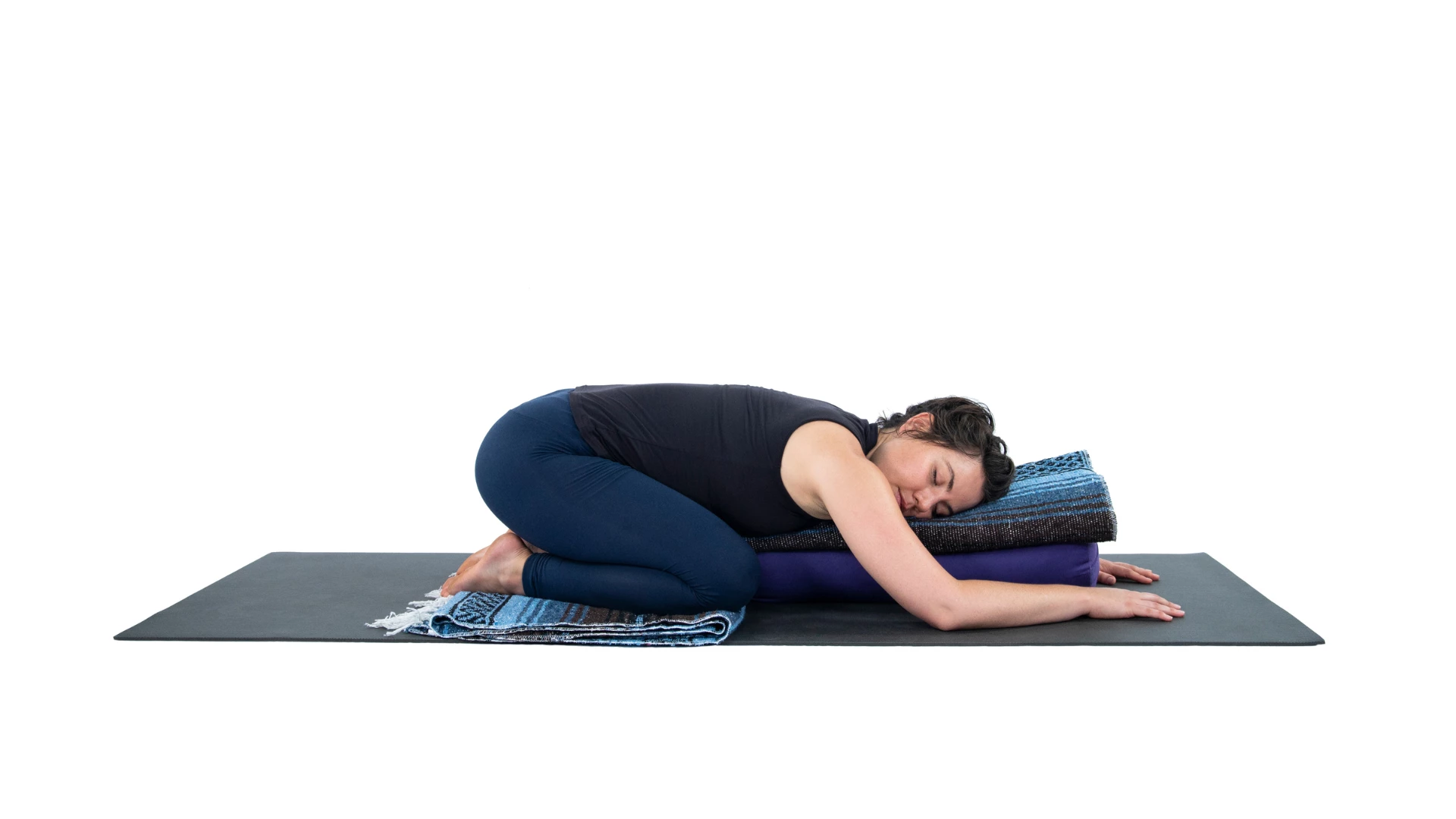
How to do it:
- Kneel on mat, big toes touch, knees wide or together.
- Exhale, sit back on heels, fold forward, forehead resting on mat or cushion, arms extended forward or alongside body.
- Breathe slowly for 1–3 minutes.
Benefits: Deeply restful and grounding; calms the nervous system, eases fatigue, helps release emotional tension.
Precautions: If knees are sensitive, place a cushion between calves and thighs.
Crafting a Routine: How to Practice for Depression Relief
Frequency & Duration
- Aim for 3-5 sessions per week, 20-45 minutes each. Some studies show benefits after 3–24 weeks of yoga practice.
- If you’re new, even 10-15 minutes daily of a few gentle poses + breathing helps.
Structure Your Session
- Centering & Breath (2–5 minutes): Sit in Sukhasana, close eyes, take slow deep breaths.
- Warm-Up Movements (3–5 minutes): Gentle neck rolls, shoulder shrugs, cat-cow stretches.
- Main Asanas (10–20 minutes): Include 3-5 of the asanas above in sequence (e.g., Adho Mukha Svanasana → Bhujangasana → Setu Bandhasana → Viparita Karani).
- Restorative/Closing (3–10 minutes): Child’s Pose + Savasana (Corpse Pose) for deep calm.
- Breathing & Reflection (2–3 minutes): Sit or lie quietly, observe breath, allow mind to settle.
Additional Tips
- Practice on an empty stomach or at least 2–3 hours after a meal.
- Use a quiet, comfortable space where you won’t be disturbed.
- Wear comfortable clothing.
- Use props (blocks, cushions, bolsters) for support if needed.
- Set an intention for your practice (e.g., “I give myself time to feel calm”).
Supporting Habits to Maximise Benefits
Yoga alone helps — but combined with healthy lifestyle habits, its effects on depression are stronger.
- Sleep & Rest: Ensure 7–9 hours of quality sleep; poor sleep worsens mood.
- Nutrition: Eat balanced meals rich in whole foods, lean proteins, fruits & vegetables. Nutrient deficits may worsen mood.
- Movement Beyond Yoga: Gentle walks, outdoor time, and light cardio support mood regulation and energy.
- Social & Emotional Support: Connect with friends/family, talk with trusted people. Yoga enhances self-awareness—but human connection matters.
- Professional Treatment: If you are on medication, in therapy, or have severe depression, use yoga as a complement — not replacement. Always consult your mental-health provider before making changes.
Safety, Precautions & When to Seek Help
- If you have physical injuries, chronic conditions (heart, hypertension, glaucoma), or are pregnant, modify poses accordingly or consult a trained yoga therapist.
- If yoga triggers strong emotional responses (crying, panic, agitation), pause and seek support. Yoga can stir deep emotions—go gently.
- Exercise caution with inversions (like Viparita Karani, Shoulder Stand) if you have neck or eye conditions.
- If depressive symptoms are severe (e.g., suicidal thoughts, hallucinations, major sleep disruption) see a mental-health professional immediately—yoga is supportive but not a substitute.
Frequently Asked Questions (FAQ)
Can yoga replace my medication for depression?
No. Yoga offers strong supportive benefits but should be used in conjunction with — not instead of — prescribed medical treatment unless advised by your provider.
How quickly will I feel better?
Some people notice small mood improvements after a few sessions. Research suggests notable changes generally occur over 4–8 weeks of regular practice.
Which style of yoga is best for depression?
Gentle Hatha yoga, restorative yoga, and kundalini-influenced styles are often recommended for mood support. The key is consistency, not intensity.
How long should each session be?
Start with 15–20 minutes if you’re new and gradually increase to 30–45 minutes.
What if I miss days?
That’s fine—consistency over time matters more than perfection. Aim for a flexible commitment.
Is breathwork important too?
Yes—pranayama (yogic breathing) enhances the calming and mood-lifting benefits of asanas. Even simple deep-breathing for 3–5 minutes helps.
Depression can feel overwhelming—but small, consistent actions build momentum. Incorporating yoga asanas, mindful breathing, and intentional movement into your routine gives you back a sense of agency over your body and mind. Over time, you may notice improved mood, clearer thinking, more resilience, and a deeper connection to yourself.